
Digital Product Passport Software for EU Product Compliance
UCVreg helps manufacturers, direct exporters and EU importers find missing supplier information, reuse approved product records and share a reviewed passport when customers or importers ask for it.
Build a reliable path from product information to a published Digital Product Passport as EU requirements develop across different product groups.
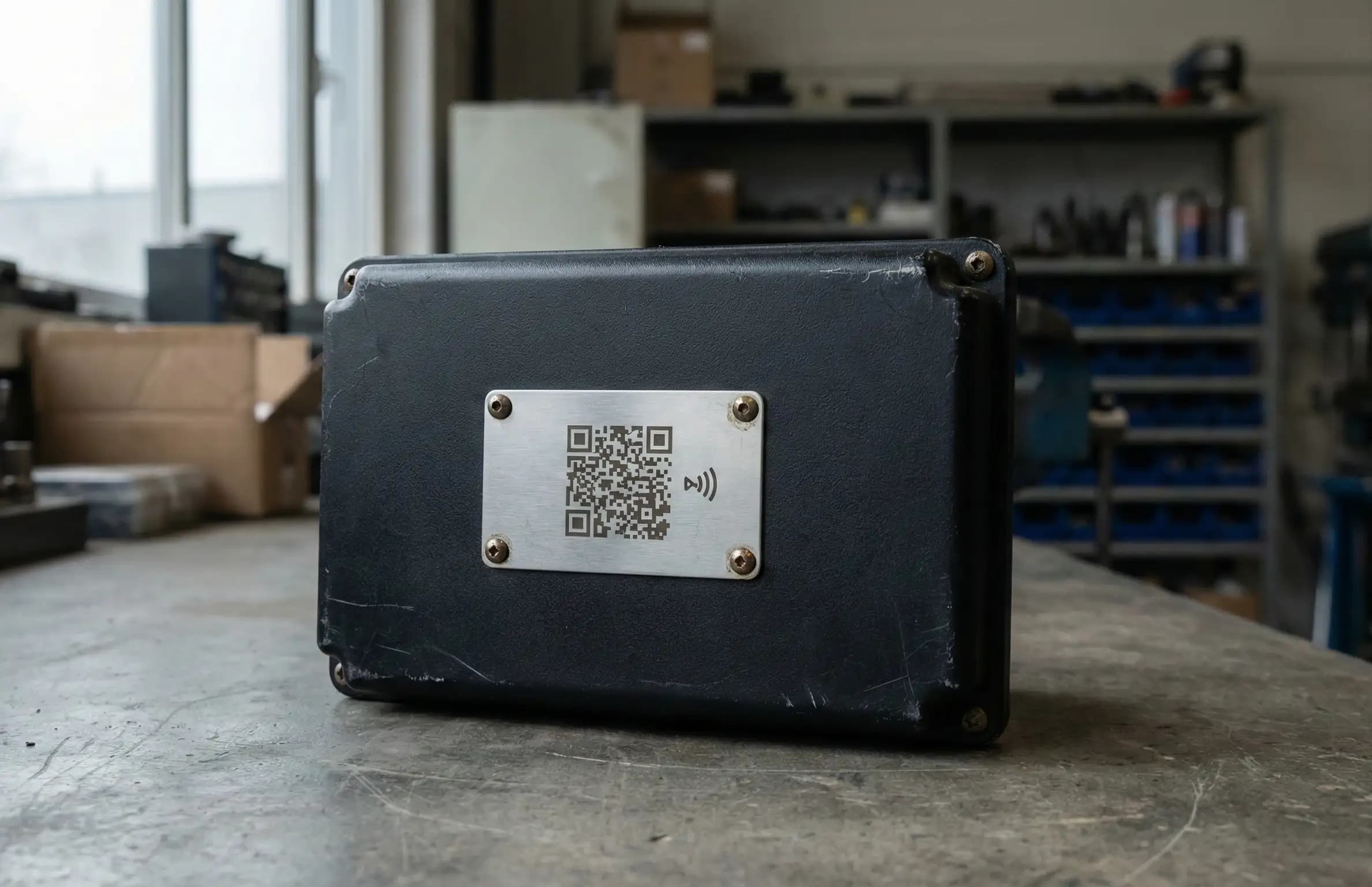

Stop chasing product information across suppliers and spreadsheets
When a customer or importer asks for a passport, teams need to find missing supplier information, reuse approved records and handle changes without losing what was already published.
Prepare
Collect supplier documents and product data; see what is missing before a request becomes urgent.
Review
Resolve gaps with suppliers and review the proposed passport record against your product context.
Publish
Publish the approved record with its identifier and keep the issued version available.
Share
Give customers, importers and other permitted users the relevant view without opening internal systems.
A practical request, from inbox to shared record
A customer asks for current product information. Your team finds the supplier document, reuses the approved material record, records the latest change, reviews the update, publishes a new version and shares the permitted passport view.
What Is a Digital Product Passport?
A Digital Product Passport is a digital record connected to a product, component or material. It can bring together relevant information about product identity, materials, sustainability, compliance and lifecycle. The exact information required depends on the product group and the applicable EU rules. There is no single DPP checklist that applies to every product.
A QR Code Is Not the Passport
A QR code or another data carrier is the way someone reaches a Digital Product Passport. It is not the passport itself. The passport is the structured information connected to the relevant product, component or material.
Requirements Depend on the Product
The information, identifiers, access rules and lifecycle details required for a DPP depend on the applicable product rules. Companies should not treat one general DPP checklist as a final legal template for every product.
A DPP can help businesses, customers, repairers, recyclers and public authorities access relevant product information in a more structured and transparent way.
Structured Product Data With a Clear Publication Point
A Digital Product Passport brings together information connected to a specific product, component or material.
Depending on the applicable product rules, a DPP may include:
- Product identity
- Material composition
- Supplier information
- Environmental information
- Compliance statements
- Conformity documentation
- Repair, maintenance or end-of-life information
These are examples only. The final required fields depend on the relevant EU legislation and product-specific requirements.
Before publication, teams may collect information from product systems, suppliers and supporting documents. This information can then be reviewed and approved before the passport is published.
Draft and published
Before publication, teams can prepare, review and approve the relevant product information. After publication, the record represents the version issued at that point in time. Where a new publication is required, an updated version can be created while the previous version remains available in the history.
See how publish-time anchoring works on the UCVreg platform. For a sector example, explore battery compliance data requirements.
Draft
Information is being prepared and reviewed.
- [x] Editable
- [x] Internal review
- [x] Not yet published
Published
The approved-for-publication passport record is available through its identifier and data carrier.
- [x] Published version
- [x] Resolvable identifier
- [x] Traceable history
Connect Each Product to the Relevant Digital Record
A product, component or material can be connected to relevant digital information through a unique identifier and a data carrier, such as a QR code where applicable. The resolution process should direct each user to the information relevant to that product and their permitted level of access, without exposing internal ERP, PLM or PIM systems.
How resolution works
- 01Product, model, batch or item
- 02Unique identifier
- 03Data carrier
- 04Resolution service
- 05Relevant information view
- Identifier-based resolutionThe identifier connects the product or product level to the relevant Digital Product Passport record.
- Controlled information accessDifferent users may receive different information depending on the applicable rules and access policy.
- Operational separationCustomers, partners or authorities can access relevant passport information without direct access to internal business systems.
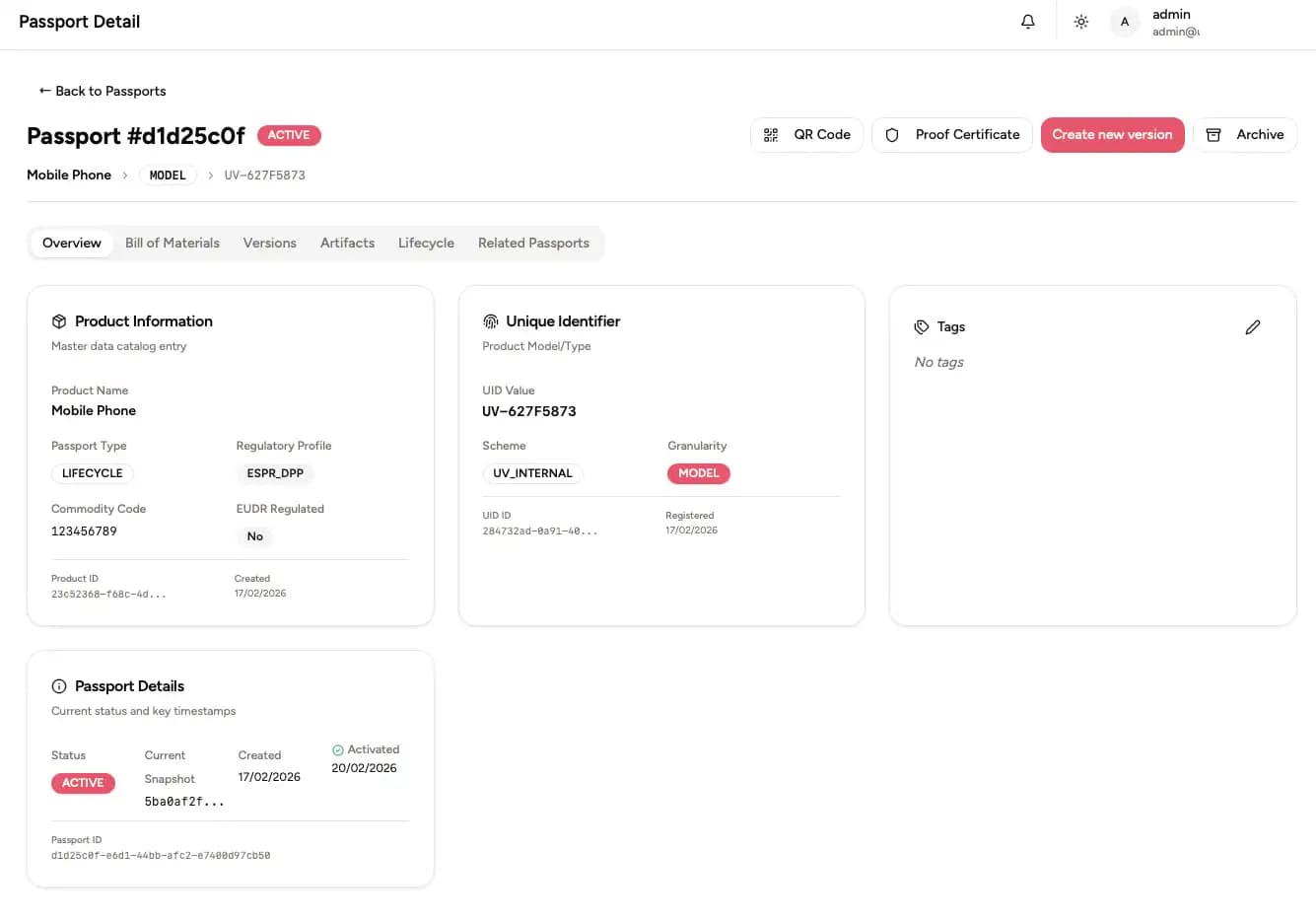
Digital Product Passport Version History
Product information, suppliers, materials and lifecycle details may change over time.
UCVreg helps keep previously published passport versions available while allowing a new version to be created when necessary.
This prevents an updated record from silently replacing the information that applied to an earlier product, batch or publication.
- Previous versions remain available
- New versions can be issued when required
- Publication history remains traceable
- The relevant version can be identified later
Each product identity can resolve to the correct published version for that point in time.
Why the History Matters
If a product or batch was placed on the market under a particular published record, that record may need to be reconstructed later. The original publication should not be silently rewritten by later operational changes.
See how versioning works on the platform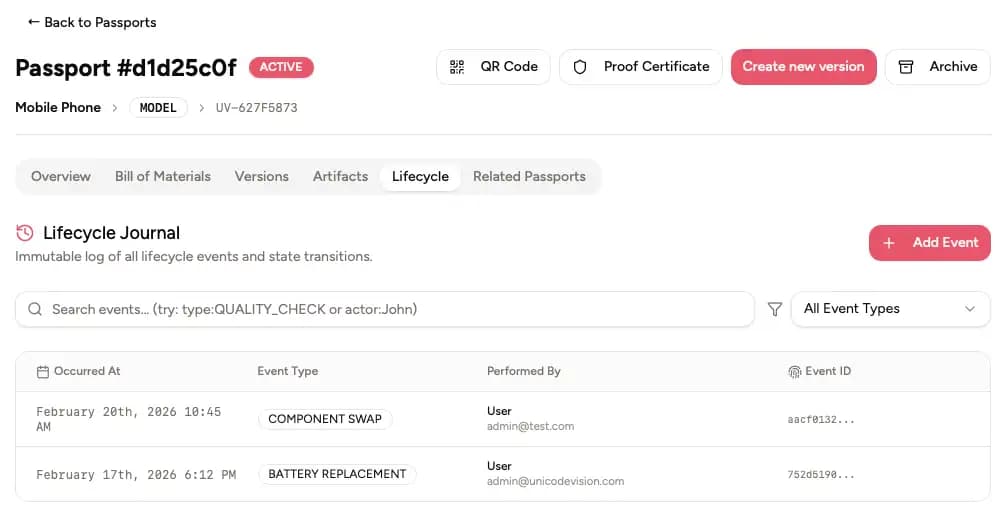
DPP Information Can Continue Through the Product Lifecycle
Depending on the product and applicable requirements, a Digital Product Passport may need to support relevant information across parts of the product lifecycle.
This may include information related to:
The exact lifecycle information and retention period depend on the product-specific rules. UCVreg helps extend the passport record with relevant updates while preserving the original published state.
Different Users May Need Different DPP Information
A Digital Product Passport may provide different information to different users. The information available to the public, authorities, repairers, recyclers and other actors depends on the applicable product rules and the organisation’s access policy.
Public information
General product and transparency information intended for public access, where required.
Authority information
Additional information that may be relevant for market surveillance or regulatory review, where required.
Repair and recycling information
Product information relevant to authorised repair, maintenance, reuse or recycling activities, where applicable.
Access should be controlled so public users do not receive restricted information, while authorised actors can access the information relevant to their role. These views are illustrative. Exact access rights depend on the applicable product rules and disclosure policy.
Supported by the UCVreg Compliance Platform
The DPP workflow is supported by UCVreg platform capabilities for version history, record integrity and controlled access. UCVreg helps teams manage the information behind a Digital Product Passport without replacing the systems used to create product, supplier or operational data.
UCVreg is a Digital Product Passport (DPP) service provider. We help your team prepare, publish, maintain and share product passports, while keeping product information connected to its supporting evidence.
The EU DPP Registry and your passport provider
The European Commission’s DPP Registry indexes passport identifiers and references. The detailed passport information is managed separately by economic operators or DPP service providers. Your team still needs to prepare the right product data and keep it available; a registry entry does not replace the passport or the applicable product requirements.
Read the Commission’s DPP Registry explanationVersion history
Keep previous published versions available while teams respond to product or supplier changes.
Record integrity
Compare the record being shared with the version your team approved for publication.
Controlled access
Share relevant information with customers, importers and other users according to policy.
What a Digital Product Passport Is Not
A PDF export
A PDF can display information, but it does not by itself provide a connected product identity, controlled resolution, version history or role-based access.
A product brochure
A brochure is marketing content. A Digital Product Passport is structured information connected to a product, component or material according to the applicable rules.
A QR code or marketing badge
A QR code or badge can provide access to information, but it is not the complete Digital Product Passport.
The Practical Digital Product Passport Implementation Guide
Learn how product identifiers, data carriers, access rules, lifecycle information and implementation planning fit together under the EU Digital Product Passport framework.
Related support content
Guides, FAQ and examples that feed this pillar. Support pages point back; this page owns the commercial SERP.
Calculate your product risk and get your free report.
A few simple questions. They show which product rules may need a look before a sale, launch, or supplier call gets stuck.
Direct Rule Screening
Instant applicability check across ESPR, DPP, EUDR, PPWR & Battery Regs.
Risk & Gap Exposure
Identify supplier data missing links and customs audit bottlenecks.
Free Audit Report
Receive a structured, actionable executive roadmap with zero obligation.
Prepare for Digital Product Passport Requirements
Start building a controlled path from product data to published passport information. UCVreg helps manufacturers, exporters and EU importers organise, review and maintain Digital Product Passport records as product-specific EU requirements develop.