
EUDR-Daten zur Rückverfolgbarkeit und Compliance von Naturkautschuk
Verbinden Sie Gummi-Kleinbauern, Plantagen, Abbaukonzessionen, Händler, Verarbeitungsbetriebe, Reifenhersteller und Automobilzulieferer mit überprüfbaren Legalitäts- und Geolokalisierungsnachweisen.
UCVreg bietet eine digitale Plattform der Unternehmensklasse für die Due-Diligence-Prüfung von Naturkautschuk im Rahmen der EU-Entwaldungsverordnung.
Der EU-Rechtsrahmen für Naturkautschuk
Geltungsbereich und Anwendungstermine für Naturkautschuk
Naturkautschuk ist gemäß Anhang I der EUDR (KN-Code 4001) als relevante Ware eingestuft. Zu den Produkten im Geltungsbereich gehören Naturkautschuklatex, technisch spezifizierter Naturkautschuk (TSR 10, TSR 20), geräucherte Laken und Compound-Kreppkautschuk.
Gemäß der EUDR müssen Betreiber, die Naturkautschuk auf den EU-Markt bringen, nachweisen, dass die Ernte auf Flächen angebaut wurde, die nach dem 31. Dezember 2020 nicht abgeholzt wurden, und dass die Abholzungsvorgänge den örtlichen Umwelt- und Landkonzessionsgesetzen entsprechen.
Die meisten EUDR-Verpflichtungen gelten ab dem 30. Dezember 2026 für große und mittlere Betreiber. Für Unternehmen, die als Kleinst- oder Kleinunternehmen gegründet wurden, gelten die Pflichten ab dem 30. Juni 2027.
Kleinbauern-Anzapfflächen und Rückverfolgbarkeit von Fabriken
Da 85 % des weltweiten Naturkautschuks von Kleinbauern mit kleinen Parzellen produziert werden, ist die Erfassung genauer Geodaten von größter Bedeutung:
Synthetischer Kautschuk (CN 4002) wird aus Erdöl gewonnen und ist vom EUDR-Geltungsbereich ausgenommen, aber gemischte Kautschukprodukte (z. B. neue Luftreifen) erfordern zertifizierte EUDR-Due-Diligence-Erklärungen für alle Naturkautschukinhalte.
- ✓GPS-Polygonkoordinaten für Plantagenkonzessionen ab 4 ha (Hevea brasiliensis)
- ✓Punkt-GPS-Koordinaten für Kleinbauern-Anbauflächen unter 4 ha
- ✓Transaktionsprotokolle zur Lieferung von rohen Becherklumpen und flüssigem Latex
- ✓Chargencodes für die Verarbeitung von Krümelkautschuk (TSR 10, TSR 20), verknüpft mit beitragenden Bauerngruppen
- ✓Gesetzliche Legalitätsnachweise des Erzeugerlandes (Landkonzessionstitel, Umweltgenehmigungen, Arbeitsrechte)
EUDR-Pipeline für Geolokalisierung und Sorgfaltspflicht
Durchgängig verifizierter Workflow von der Lieferantendatenerfassung bis zur EU-Marktzulassung
Geolokalisierung der Fläche
GPS und PolygoneErfassen Sie Polygonkoordinaten für landwirtschaftliche Parzellen (>4 ha) und Punktkoordinaten (<4 ha) über alle Lieferkooperativen hinweg.
Entwaldungsprüfung
Copernicus-SatellitendatenAutomatischer räumlicher Abgleich mit Waldreferenzdaten vom 31. Dezember 2020 zum Nachweis von Entwaldungsfreiheit und gesetzlicher Legalität.
Sorgfaltspflichterklärung
TRACES-NT-RegisterÜbermitteln Sie verifizierte Sorgfaltspflichterklärungen an die EU-Plattform TRACES-NT und erzeugen Sie unveränderliche Referenznummern.
Zollabfertigung
MarktfreigabeÜbermitteln Sie überprüfbare DDS-Referenzcodes an Zollbehörden, Hafenlogistik und EU-Käufer.
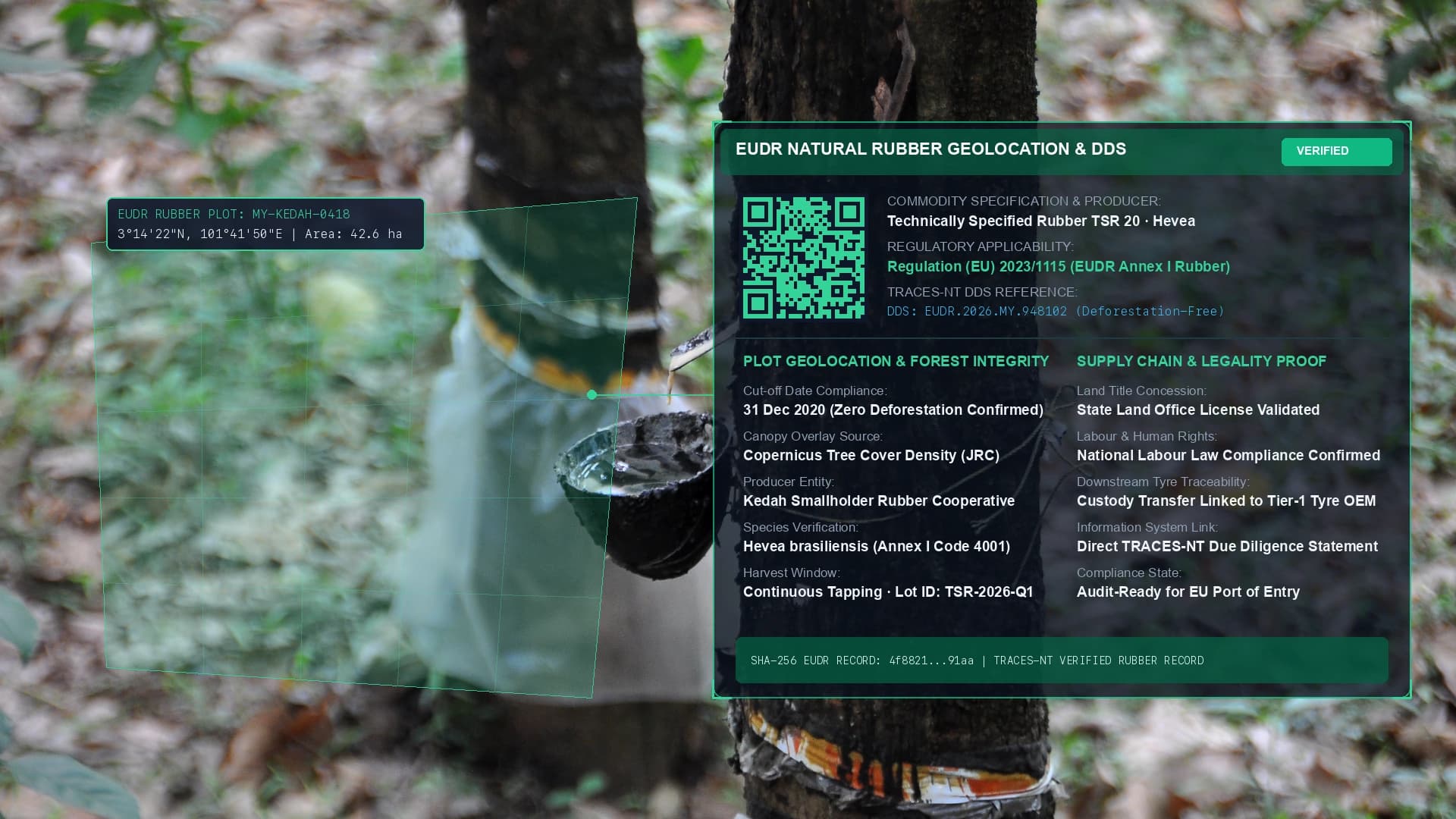

Wo Konformitätsdaten für Naturkautschuk lückenhaft werden und wie UCVreg die Vorbereitung unterstützt
Sammeln Sie die Geolokalisierung von Millionen von Kleinbauern
Naturkautschuk wird täglich in kleinen Mengen auf Millionen von Familiengrundstücken in Südostasien und Westafrika gesammelt.
Erfassen Sie mobile GPS-Polygone und Punktkoordinaten aus Händler-Sammel-Apps mit automatischer Geometrievalidierung.
Stellen Sie sicher, dass es auf den Kautschukparzellen von Kleinbauern keine Abholzung gibt
Die Unterscheidung zwischen ausgewachsenen Gummi-Agroforstbaumkronen und natürlichen Tropenwäldern erfordert eine multitemporale Satellitenanalyse.
Führen Sie ein automatisiertes räumliches Screening anhand der Waldbasislinien von Copernicus 2020 durch, um zu bestätigen, dass keine Entwaldung erfolgt.
Verfolgen Sie Becherklumpen durch die Verarbeitung von Krümelgummi in der Fabrik
Rohe Becherklumpen von Hunderten von Händlern werden in kontinuierlichen Fabrikläufen gewaschen, geschreddert und zu 33,33 kg TSR-Ballen geronnen.
Führen Sie Massenbilanz- und Trennungsaufzeichnungen auf Chargenebene, um TSR-Palettenballen mit beitragenden Kleinbauern-Lieferantengruppen zu verknüpfen.
Überbrücken Sie die Gummi-Due-Diligence-Prüfung der EUDR mit den Reifen-DPP-Aufzeichnungen
Nachgelagerte Reifenhersteller benötigen Nachweise über die Herkunft des Gummis, um sowohl die EUDR-Due-Diligence-Prüfung als auch die ESPR-Vorschriften für den Reifenproduktpass zu erfüllen.
Exportieren Sie verifizierte TRACES-NT DDS-Referenznummern nahtlos in die Stücklisten des Reifenherstellers und in digitale Produktpassdatensätze.
Regulatorische Fakten
Allgemeine Wirtschaftsakteure müssen die EUDR-Sorgfaltspflicht ab dem genannten Stichtag erfüllen.
30. Dezember 2026
Quellenangabe: Regulation (EU) 2025/2650 amending Regulation (EU) 2023/1115
Kleinst- und Kleinakteure bei Erzeugnissen, die zuvor nicht unter die EUTR fielen, folgen dem späteren genannten Stichtag. Kleine und Kleinstakteure bei zuvor EUTR-erfassten Erzeugnissen bleiben beim allgemeinen Stichtag.
30. Juni 2027
Quellenangabe: Regulation (EU) 2025/2650 Art. 38(2) (non-EUTR micro/small operators)
Fragen zum Sektor
Welche Informationen und Nachweise sollten die Teams vorbereiten?
Verbinden Sie Gummi-Kleinbauern, Plantagen, Abbaukonzessionen, Händler, Verarbeitungsbetriebe, Reifenhersteller und Automobilzulieferer mit überprüfbaren Legalitäts- und Geolokalisierungsnachweisen. Allgemeine Wirtschaftsakteure müssen die EUDR-Sorgfaltspflicht ab dem genannten Stichtag erfüllen. (30. Dezember 2026). Kleinst- und Kleinakteure bei Erzeugnissen, die zuvor nicht unter die EUTR fielen, folgen dem späteren genannten Stichtag. Kleine und Kleinstakteure bei zuvor EUTR-erfassten Erzeugnissen bleiben beim allgemeinen Stichtag. (30. Juni 2027).
Bei welchen Produkten und Organisationsrollen sollten die Teams den Anwendungsbereich prüfen?
Umfasst Naturkautschuklatex (vorvulkanisiert oder nicht), geräucherte Platten, technisch spezifizierter Naturkautschuk (TSR) und andere Formen von Naturkautschuk/Balata. Der Anwendungsbereich muss anhand des einschlägigen KN-/HS-Codes geprüft werden. Die Pflichten hängen anschließend vom Produkt, der Markttätigkeit, der Unternehmensgröße und davon ab, ob das Unternehmen als Marktteilnehmer, Händler oder nachgelagerter Akteur handelt.
Wie sollten die relevanten Daten und Nachweise verwaltet werden?
Erfassen Sie mobile GPS-Polygone und Punktkoordinaten aus Händler-Sammel-Apps mit automatischer Geometrievalidierung.
Wo sollten die Teams beginnen?
Schaffen Sie eine kontrollierte Grundlage für Kleinbauern-Anzapfungspolygone, TSR-Fabrik-Batch-Ledgers, Abholzungsüberprüfungen und TRACES-NT-Einreichungen.
Geltungsbereich
4001 10 004001 21 004001 22 004001 29 004001 30 00Umfasst Naturkautschuklatex (vorvulkanisiert oder nicht), geräucherte Platten, technisch spezifizierter Naturkautschuk (TSR) und andere Formen von Naturkautschuk/Balata.
Synthetischer Kautschuk (CN 4002) fällt nicht in den Geltungsbereich der EUDR.
Um zu erfahren, wie UCVreg die Sammlung von Gummipolygonen für Kleinbauern und die Rückverfolgbarkeit von TSR-Chargen strukturiert, besuchen Sie unsereEUDR-Compliance-Leitfaden für Naturkautschuk.