
Préparation ESPR et données matières pour le textile
Préparez les données relatives aux produits, matériaux, fournisseurs et cycles de vie en vue des exigences européennes d’écoconception textile à venir et des passeports numériques de produits.
UCVreg helps textile manufacturers, apparel brands, importers and retailers structure compliance information, connect claims to source evidence and maintain controlled regulatory records as EU requirements develop.
Le cadre réglementaire de l’UE pour Textile et habillement
ESPR Textile Requirements
The Ecodesign for Sustainable Products Regulation establishes the framework for introducing sustainability and information requirements for products placed on the EU market.
Textile apparel is a priority product group in the ESPR Working Plan 2025–2030. The European Commission currently plans to adopt the textile-specific delegated act in Q4 2027.
This is an indicative adoption target—not the date from which every textile product must comply. The delegated act will define the textile products covered, applicable ecodesign and information requirements, transition period and final application date.
Textile Digital Product Passport
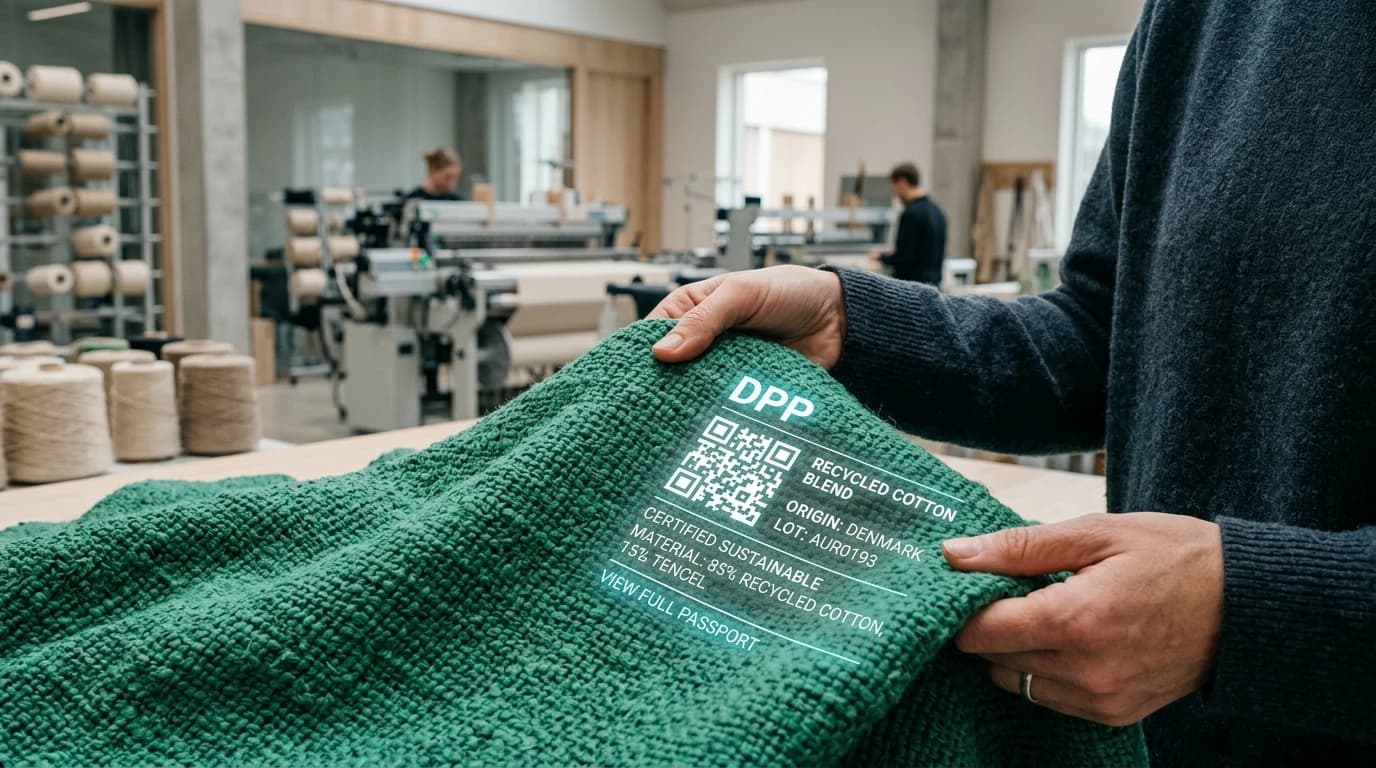
The future textile delegated act will introduce the product-specific Digital Product Passport requirements.
Depending on the final rules, a textile DPP may contain:
The exact data fields, required level of product identification, access permissions and technical specifications have not yet been finalised.
- ✓Product identification and characteristics
- ✓Fibre and material composition
- ✓Relevant origin information
- ✓Identification of economic operators
- ✓Use, care, repair and maintenance information
- ✓Information supporting reuse, resale and refurbishment
- ✓Disassembly, recycling and end-of-life information
- ✓Compliance and traceability documentation
Parcours ESPR du passeport numérique de produit
Parcours vérifié de bout en bout, de l’intégration des données fournisseur à la mise sur le marché de l’UE
Intégration des nomenclatures et matériaux
Données de chaîne d’approvisionnementCollectez les compositions de fibres et matériaux à plusieurs niveaux, les taux de contenu recyclé et les déclarations d’essais fournisseurs.
Validation de l’écoconception
ESPR et durabilitéVérifiez la durabilité du produit, les seuils chimiques SVHC, les limites de microplastiques et les règles de l’article 23 relatives aux invendus.
Enregistrement au registre DPP
Passerelle décentraliséeEnregistrez les passeports produits cryptographiques sur la passerelle DPP de l’UE avec des droits d’accès fondés sur les rôles.
Vérification du support de données
GS1 QR / matrice 2DApposez des supports de données 2D persistants, accessibles aux consommateurs, réparateurs professionnels, recycleurs et autorités douanières.

Textile Fibre Labelling and DPP Harmonisation
Regulation (EU) No 1007/2011 already governs textile fibre names and the labelling and marking of fibre composition.
Future textile DPP requirements are expected to work alongside the existing Textile Labelling Regulation. A Digital Product Passport should therefore be prepared as an additional governed information layer not treated as a replacement for current fibre-composition labels unless future EU legislation provides otherwise.
EU Ban on Destroying Unsold Apparel and Footwear
Since 19 July 2026, large enterprises have been prohibited from destroying unsold apparel, clothing accessories and footwear, unless a defined derogation applies. Permitted circumstances under Commission Delegated Regulation (EU) 2026/296 include specified cases involving product safety, irreparable damage and other situations where continued use is not reasonably possible.
The prohibition and ESPR disclosure obligations apply to medium-sized enterprises from 19 July 2030. Micro and small enterprises are generally exempt, although the ESPR contains safeguards against using exempt businesses to circumvent the prohibition.
Commission Implementing Regulation (EU) 2026/2 establishes the standardised format for disclosing information about discarded unsold consumer products. The format applies from February 2027.
Où les données de conformité de Textile et habillement se fragmentent et comment UCVreg accompagne la préparation
Connect materials, fibres and product components
Fibre composition, trims, finishes, dyes and recycled-material claims are often distributed across product files, supplier declarations and spreadsheets.
Connect textile products to materials, components, bills of materials, suppliers and supporting evidence within one governed product structure.
Organise multi-tier supplier evidence
Relevant information may sit across fibre producers, spinning, weaving, dyeing, finishing and garment-assembly partners.
Link suppliers, production facilities and documents to the relevant material or product component. Controlled access allows authorised partners to contribute information without accessing the complete regulatory record.
Preserve changing product information
Fibre sources, materials, finishes, suppliers and care information can change between product models, production batches or seasons.
Maintain versioned regulatory records and append-only lifecycle events without overwriting earlier approved states. Preserve which specifications and evidence supported each published product record.
Prepare trustworthy textile DPP records
A QR code or product page does not demonstrate that the underlying information is complete, approved or unchanged.
Apply completeness checks, human approval workflows and SHA-256 integrity verification before publication. Records can be updated as textile products, supporting evidence and final ESPR requirements develop.
Faits réglementaires
Les textiles figurent dans le plan de travail ESPR avec une année indicative d'acte délégué.
2027
Référence: Commission Communication COM(2025) 187 final
Questions du secteur
Quelles informations et preuves les équipes doivent-elles préparer ?
Préparez les données relatives aux produits, matériaux, fournisseurs et cycles de vie en vue des exigences européennes d’écoconception textile à venir et des passeports numériques de produits. Les textiles figurent dans le plan de travail ESPR avec une année indicative d'acte délégué. (2027).
Quels produits et rôles organisationnels les équipes doivent-elles vérifier pour déterminer le périmètre ?
Sont concernés les vêtements, les accessoires vestimentaires, les chaussures et les articles textiles prioritaires du plan de travail ESPR. Les équipes doivent aussi confirmer le rôle de l’organisation et la catégorie de produit applicable avant de considérer un produit comme couvert.
Comment gérer les données et les preuves pertinentes ?
Reliez les produits textiles aux matériaux, composants, nomenclatures, fournisseurs et preuves justificatives dans une structure produit maîtrisée.
Par où les équipes doivent-elles commencer ?
Établissez une base maîtrisée pour les passeports numériques de produit textiles, les preuves fournisseurs et l’évolution des exigences ESPR.
Champ d'application
61016102610361046105610961106201620262036204620562066211Covers wearing apparel, clothing accessories, footwear and textile articles prioritised under the ESPR Working Plan 2025–2030.
Indicative delegated act adoption targeted for Q4 2027 with mandatory compliance following the transition period.
To learn how UCVreg structures material composition and lifecycle traceability for apparel, explore our flux de travail du passeport numérique de produit textile.