
SIAL Paris 2026: Coffee, Cocoa and EUDR Readiness
A view from SIAL Paris 2026 on coffee and cocoa sourcing: connecting origin stories, production plots and batch records with evidence that buyers can assess.
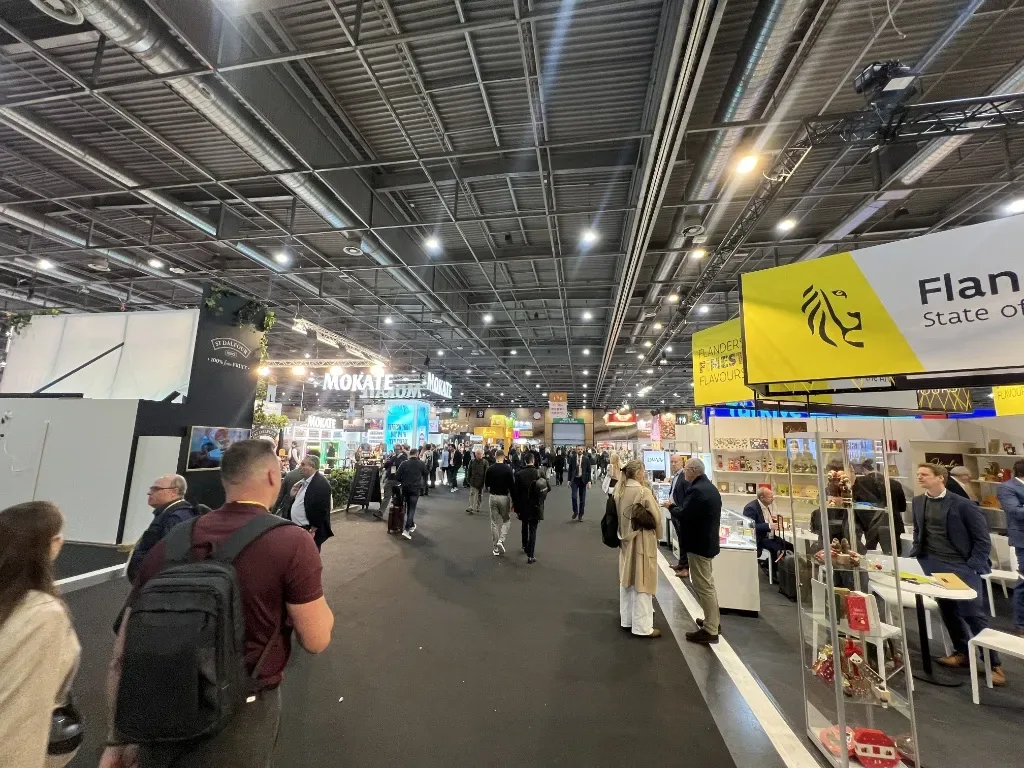
Cover: SIAL Paris 2026. Photograph: UnicodeVision.
A food exhibition brings products grown thousands of miles apart within a few aisles of one another. A country's production identity, another country's brand, a coffee pack, a product display and the ambition to enter a new export market share the same space. In our photographs from SIAL Paris 2026, that concentration is unmistakable. International trade becomes something visible in stands and products, rather than an abstract set of statistics.
Coffee and cocoa illustrate why this world extends well beyond the finished product. Both begin with an agricultural source and pass through different businesses, countries and processes before reaching a buyer. What appears at the end is usually a small part of that journey: a brand name, an origin statement, a roast profile or the cocoa percentage on a chocolate wrapper.
Those details matter. They influence how a product is positioned, what it costs and how a buyer understands it. The EU Deforestation Regulation, or EUDR, requires another layer of enquiry behind that commercial presentation. Can the source of a particular product be explained for a particular transaction? Do the records that accompany it connect consistently across the supply chain?
The exhibition brings a wider question into focus: the distance between knowing a product's story and holding evidence that allows its source to be assessed.
What the exhibition shows, and what remains outside the frame
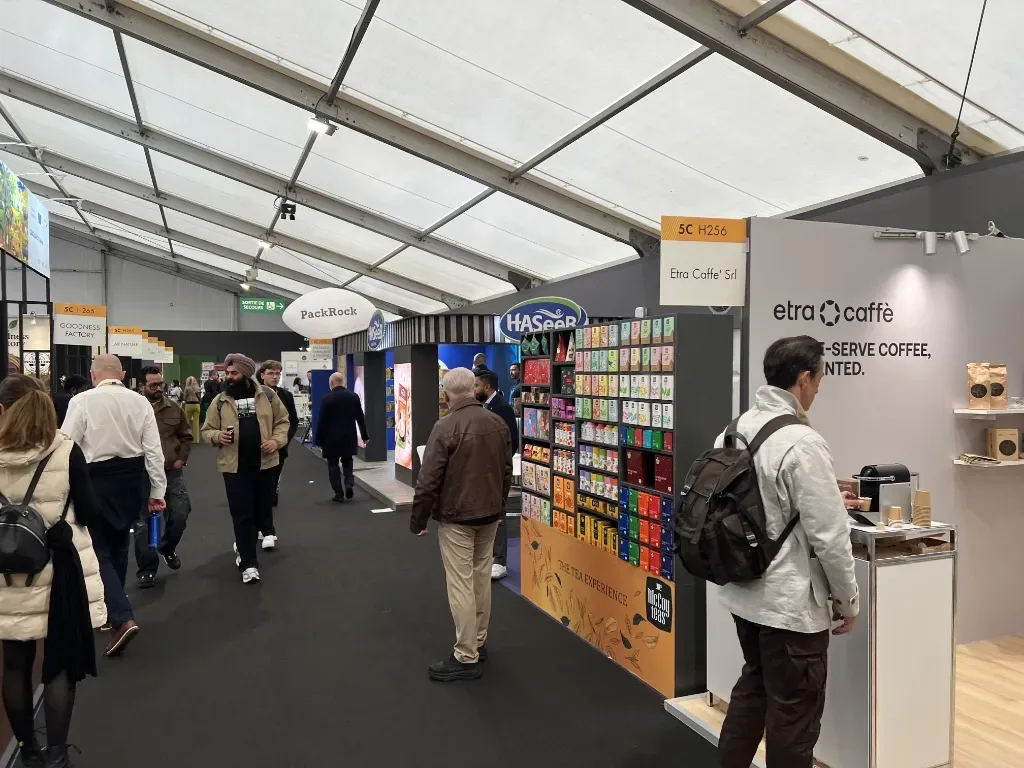
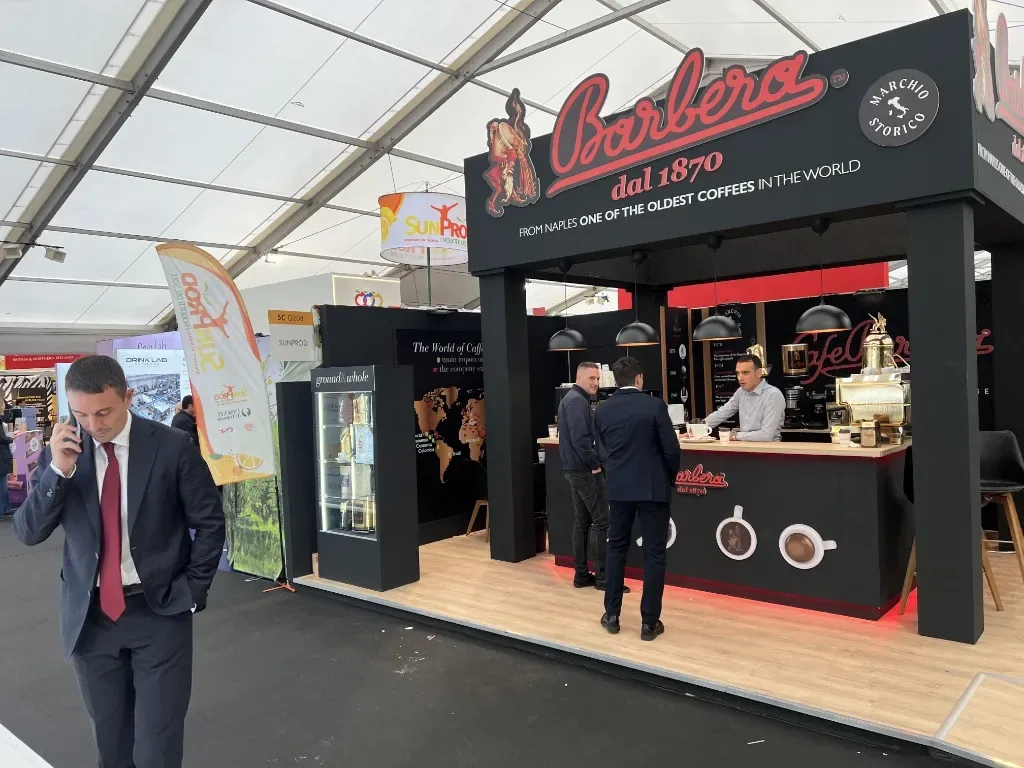
The coffee stands in our photographs display packaging, brands, machines and product ranges. They show the presentation side of trade. There are also things a photograph cannot establish: which producers supplied a product, which harvests were used or which records support a shipment.
Keeping that distinction matters. The size of a stand does not reveal a company's readiness, and the design of its packaging does not establish regulatory compliance. These images provide a concrete starting point for considering supply chains; they are not compliance assessments of the exhibitors.
An exhibition may be where a buyer discovers a product and begins an evaluation. A purchase decision goes further than the sample. The product must be available consistently, its specified characteristics must be maintained and the necessary information must be obtainable. EUDR brings production plots, deforestation and relevant legislation in the country of production into that relationship.
Readiness therefore extends beyond a list of documents requested after the event. Procurement, quality, logistics and compliance teams need to be able to describe the same product through connected records.
Why an origin name is only the beginning for coffee
Origin is a powerful commercial language in coffee. A country or region can distinguish one product from another. Naming a country, however, does not by itself identify the production plots behind a particular batch.
Depending on the supply chain, the grower, co-operative, collector, processing facility, exporter, importer and roaster may be separate businesses. A trading relationship with an exporter does not mean that all production areas are already known. Equally, buying from a single producer does not automatically make the records complete. The question is how the particular product flow can be explained and substantiated.
Roasting green coffee or blending different coffees makes the distinction especially relevant. The finished product may retain the same name while its input batches change. Identical packaging can contain coffee linked to different purchasing records at different points in time. A single catalogue entry and all the batches held in a warehouse are therefore different levels of information.
A useful operational question follows: which input records connect to the product in the shipment under review, and where might that connection break down? The answer is independent of how persuasively the origin story has been written.
Processing cocoa does not remove the questions about its source
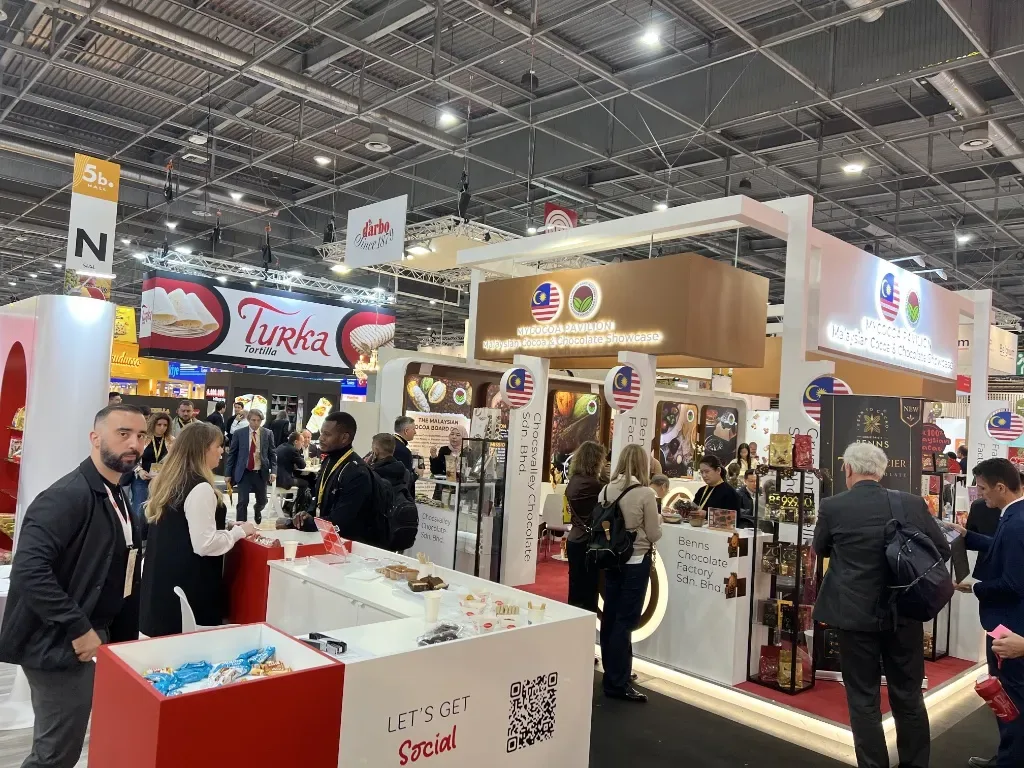
Cocoa highlights a different feature of the chain. The same agricultural commodity can appear in several commercial forms. Cocoa beans, paste, butter and powder occupy different points in processing, while chocolate can combine cocoa ingredients with other components.
A product becoming more processed does not make its source irrelevant. For a manufacturer, an important connection lies between the cocoa inputs purchased and the products made and dispatched. A change of input can affect more than the purchasing file; it can also affect the associated traceability and assessment.
There is an important limit to this discussion. It would be wrong to say that every food containing cocoa automatically falls within EUDR. A product's trade name or ingredient list does not determine the legal scope on its own. Its customs classification, the current wording of Annex I and the business's legal role in the transaction need to be considered together.
This makes cocoa sourcing more than a matter for the raw-materials purchasing team. Production records, recipe changes, stock movements and dispatch preparation can all help preserve the connection to the product. That does not make a particular software model a legal requirement. It describes the practical work of keeping a business's own product flow understandable.
EUDR as at 21 October 2026: one heading, several dates
The legal foundation is Regulation (EU) 2023/1115, as amended. Regulation (EU) 2025/2650 changed certain duties and application dates. The European Commission's current overview identifies 30 December 2026 as the general application date for large and medium-sized operators.
The 30 June 2027 date is not an unconditional extension available to every small business. The relevant micro or small undertaking conditions must have been met by 31 December 2024, and the other statutory conditions must be considered. There is also an exception for timber products covered by the EU Timber Regulation, the EUTR.
Coffee requires a further distinction. Coffee under heading 0901 is already included in Annex I. By contrast, Delegated Regulation (EU) 2026/2102 adds coffee extracts, essences and concentrates under 2101 11 00, with a specific application date of 30 December 2027 for that new entry. Soluble coffee is among the products addressed by this scope update.
A general statement about “the coffee deadline” is consequently insufficient. The actual coffee product needs to be identified first. Beans or roasted coffee and the newly added extracts entry should not be presented as if they necessarily share the same application date.
For cocoa, headings 1801–1806 cover various products from beans to chocolate. The 2026 amendment also clarifies the exclusion under heading 1802 of waste within the meaning of waste legislation. This is another reason to examine the current Annex I for the actual product. A sector label in an exhibition catalogue cannot substitute for a legal scope assessment.
Deforestation, legality and declarations answer different questions
EUDR's central conditions work together. Relevant products must be deforestation-free, produced in accordance with relevant legislation in the country of production and supported by the applicable declaration framework. For coffee and cocoa, the deforestation cut-off is 31 December 2020. The land on which the relevant commodity was produced must not have been deforested after that date.
These conditions are not different names for the same enquiry. Knowing where a product was grown does not automatically settle the legal aspects of its production. A supplier's general compliance declaration does not, on its own, answer every question about the source of a specific product. A useful assessment distinguishes what the available information demonstrates from what it leaves unresolved.
Certificates and third-party verification can provide valuable inputs. They should not be assumed to replace all EUDR obligations by themselves. A digital record is similarly not reliable simply because it is digital. The product it concerns, the source of the information, its currency and its consistency with other records remain important.
Nor do operators, downstream operators and traders have identical duties. The role distinctions introduced by the 2025 amendment, together with simplifications for micro or small primary operators, need to be taken into account. Claiming that every business must submit the same statement for every batch would misrepresent the current framework.
Collecting documents is different from explaining a decision
Businesses may face a problem of connection as much as a problem of missing information. A supplier name can sit in procurement, a batch identifier in the warehouse, a production record in another system and the relevant correspondence in an email inbox. Each record may be correct in isolation, yet showing that they concern the same product flow can take considerable work.
The real test comes when something changes or conflicts. Who is informed when the country of production changes? Is the assessment revisited when a new input is used under an existing product name? If information needed to explain a batch's source is missing, does that become visible before the dispatch decision?
These are organisational questions. Collecting more documents can add complexity if responsibility for records, the updating process and the treatment of exceptions remain unclear. A prepared business can go beyond identifying the right folder: it can explain the information on which a decision was based.
A practical exercise after the exhibition
Selecting a representative product can be more useful than trying to redesign an entire supply chain at once. Following a coffee batch or cocoa product from purchase to dispatch can reveal gaps that remain abstract in a general readiness meeting.
Begin by establishing product scope and the company's role in the transaction. Match the supplier, country of production, quantity, batch records and relevant production-area information. Where processing or blending takes place, examine the connection between inputs and outputs. Review how the risk assessment and applicable declaration references connect to those records.
Then ask the more difficult questions. Who completes missing information? Who evaluates two conflicting documents for the same product? How is a change of supply detected? Which circumstances should prevent the process from progressing? If only the compliance team can answer, the connection with everyday operations may need further work.
This exercise does not replace a statutory compliance checklist. It is a practical way to test how the business's own flow works. Its useful output is a clearer account of open questions, responsibilities and decision points, rather than another collection of folders.
What remains after SIAL: a structure that can carry the product story
The photographs from SIAL Paris 2026 show the strength of the presentation around food products. For coffee and cocoa, origin, work, processing knowledge and brand narrative remain important parts of trade. Their value does not disappear as a buyer looks more deeply. The records that support the story become more important alongside them.
EUDR readiness should therefore be considered as more than a race towards an application date. It involves making the relationship between a product's commercial identity and its production and sourcing records understandable. Establishing that relationship gives a business more than additional information: it helps distinguish information that is useful for a decision from information that merely happens to be available.
This is a useful starting point for exploring UCVreg's approach to products, sources and EUDR evidence. For further context, our articles on why EUDR was introduced and the transition from documents to evidence examine the reasoning behind the framework and the role of records.
The question after the exhibition is as clear as any product pitch: when someone asks where a product comes from, do the records tell the same story?
No claim is made that companies pictured are UCVreg customers, partners or compliant with EUDR. The article contains no undocumented interviews or quotations. Legislation checked as at 21 October 2026; official sources must be checked again before implementation.